Jokhang Temple: The Ultimate Pilgrimage in Tibetan Buddhism

Jokhang Temple: The Ultimate Pilgrimage in Tibetan Buddhism

Overview: The Spiritual Nexus of the Snowy Plateau

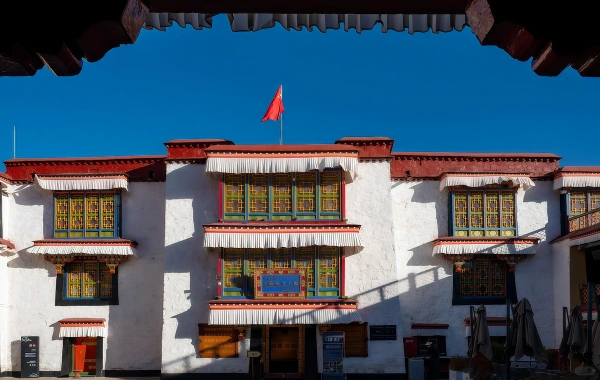
Jokhang Temple stands as the supreme holy site revered by all sects of Tibetan Buddhism, and—more importantly—it serves as the irreplaceable ultimate destination for every Tibetan believer’s pilgrimage. In 2000, the Jokhang Temple was inscribed as a UNESCO World Cultural Heritage site as an extension of the Potala Palace complex; it remains a timeless exemplar of Tibetan religious architecture and a historical testament to the cultural exchange between the Han and Tibetan peoples.

Key Highlights at a Glance

Distinguishing Features: World Cultural Heritage Site

Core Experiences: Admiring kilometers of Tibetan-style murals; viewing the Tang-Tibet Alliance Tablet

Suggested Visit Duration: 1.5–2 hours

Address: Barkhor Street, Chengguan District, Lhasa City, Tibet Autonomous Region

  • Jokhang Temple: The Ultimate Pilgrimage in Tibetan Buddhism-1
  • Jokhang Temple: The Ultimate Pilgrimage in Tibetan Buddhism-2
  • Jokhang Temple: The Ultimate Pilgrimage in Tibetan Buddhism-3
  • Jokhang Temple: The Ultimate Pilgrimage in Tibetan Buddhism-4

Origins: Princess Wencheng’s Vision and the Thousand-Year-Old Sanctuary

Furong Ancient Town Furong Ancient Town

A Divine Sign at Wotang Lake—The Dropped Ring and the Emergence of the White Pagoda

The story of the Jokhang Temple begins with a legendary tale regarding the selection of its auspicious site. In the 7th century AD, after King Songtsen Gampo of Tibet married Princess Bhrikuti of Nepal and Princess Wencheng of the Tang Dynasty, he decided to construct a temple to house the two statues of Shakyamuni Buddha that the princesses had brought with them. Legend has it that King Songtsen Gampo once stood by the shores of Wotang Lake and promised Princess Bhrikuti that he would build the temple at whatever spot his ring happened to land. Unexpectedly, the ring fell directly into the lake; instantly, a shimmering web of light spread across the water's surface, and within that luminous web, a nine-story white pagoda appeared—thus, the site for the temple was determined. The final selection and surveying of the site were ultimately entrusted to Princess Wencheng, who possessed a profound mastery of *feng shui* principles. Although the temple was modest in scale upon its initial construction, it underwent continuous renovation and expansion over successive generations to reach the magnificent scale seen today. 1.2 The Thousand-Year Journey of the Jowo Buddha—The Legendary Sanctuary of the Three Life-Sized Statues

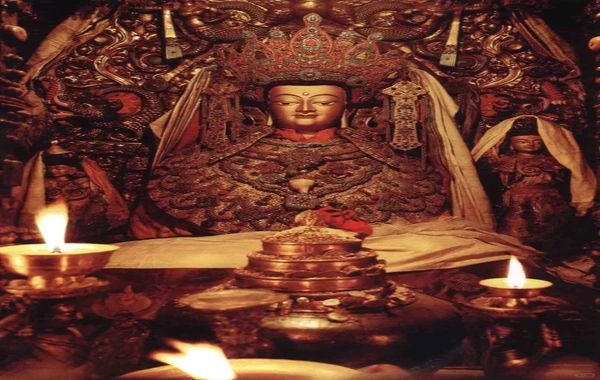
The fundamental reason the Jokhang Temple has attained the status of the supreme holy site in Tibetan Buddhism lies in the fact that it enshrines the life-sized statue of Shakyamuni Buddha at the age of twelve—known in Tibetan as the "Jowo Buddha." In the world today, only three statues personally sculpted, consecrated, and blessed by Shakyamuni Buddha himself still exist: the life-sized representations of him at the ages of eight, twelve, and twenty-five. These are enshrined respectively in the Ramoche Temple and the Jokhang Temple in Lhasa, Tibet, and within the Mahabodhi Temple in Bodh Gaya, India; all are regarded as supreme holy objects capable of granting "liberation upon sight."

In 641 AD, when Princess Wencheng traveled far to marry into the Tubo Kingdom, Emperor Taizong of the Tang Dynasty presented this life-sized statue of the twelve-year-old Buddha as his most precious "dowry" for Tibet. It was initially enshrined in the Ramoche Temple, which had been constructed specifically for Princess Wencheng. Later, amidst the turmoil of war, monks concealed the statue within the Jokhang Temple for safekeeping. Subsequently, when Princess Jincheng of the Tang Dynasty arrived in Tibet, she formally transferred the twelve-year-old statue to its permanent home in the Jokhang Temple, while moving the eight-year-old statue—which had originally been enshrined in the Jokhang—to the Ramoche Temple. Since that time, the Jowo Buddha has remained peacefully enshrined in the Jokhang Temple, becoming an unparalleled pilgrimage center in the hearts of Tibetan Buddhist devotees.

> Deep Dive: Explore More Tibetan Buddhist Cultural Heritage  >> [Yungang Grottoes] 

Must-See Wonders: A Pilgrimage Through Architecture, Sacred Statues, and Murals

Furong Ancient Town Furong Ancient Town Furong Ancient Town Furong Ancient Town

Architectural Gem—A Timeless Exemplar of Multicultural Fusion

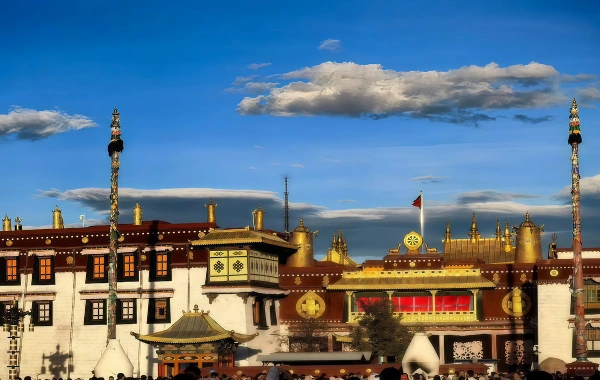
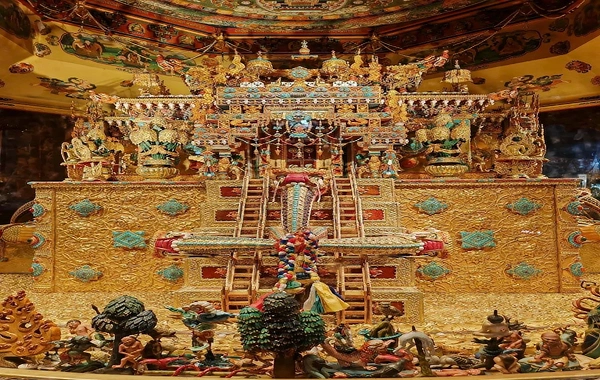
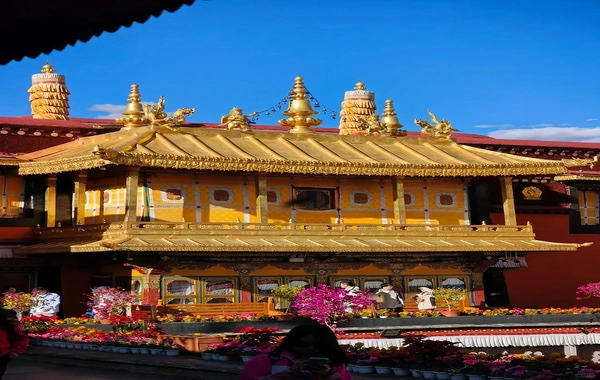
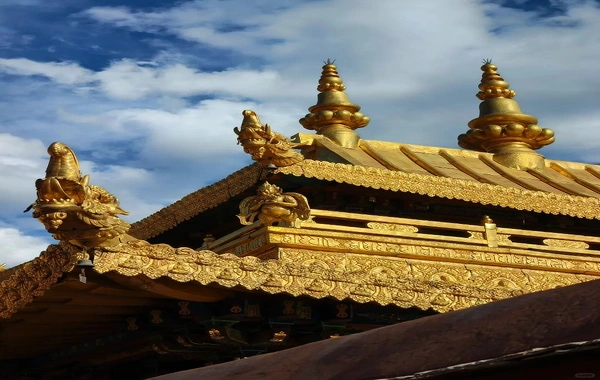
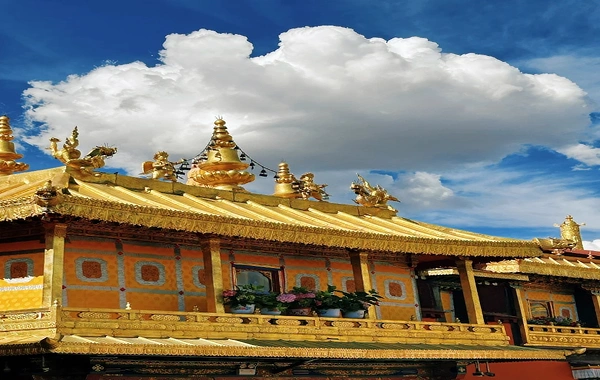
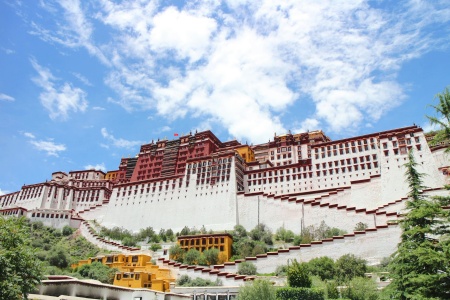
The architecture of the Jokhang Temple stands as a masterpiece representing the perfect fusion of four distinct architectural styles: Tibetan, Han Chinese, Nepalese, and Indian. It is hailed as a timeless exemplar of Tibetan religious architecture. The entire temple complex rises four stories high; its golden roofs shimmer brilliantly under the high-altitude sunlight, exuding an air of magnificent grandeur. ''Golden Roofs and Bracket Sets (Han Chinese Style):'' The golden roofs of the Jokhang Temple adopt the quintessential Han Chinese 'xieshan' (hip-and-gable) style. The bracket sets ('dougong')—layers of interlocking wooden supports projecting outward—echo the architectural aesthetics of Beijing’s Forbidden City, serving as a vivid testament to the harmonious fusion of Han Chinese and Tibetan architectural craftsmanship.

''Watchtower Structures and Carved Beams (Tibetan Style):'' The main body of the complex features a distinctively Tibetan watchtower-style structure; its walls taper noticeably toward the top, imparting a sense of solidity and imposing weight. The Tibetan-style carvings adorning the beams and pillars are intricate and elaborate, showcasing the exceptional artistry of Tibetan craftsmen.

''Carved Recumbent Beasts and Sphinxes (Nepalese and Indian Styles):'' Arranged in rows beneath the eaves of the main hall’s second and third stories are 103 wooden carvings of recumbent beasts and sphinx-like figures. With their unique forms, these sculptures exude a rich South Asian artistic flair, serving as a vivid manifestation of Nepalese and Indian architectural styles transplanted onto the high-altitude Tibetan Plateau.

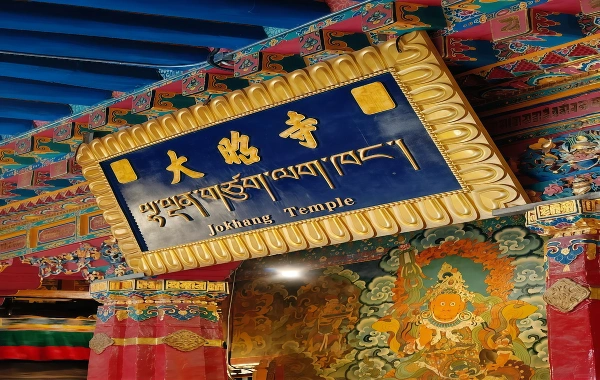
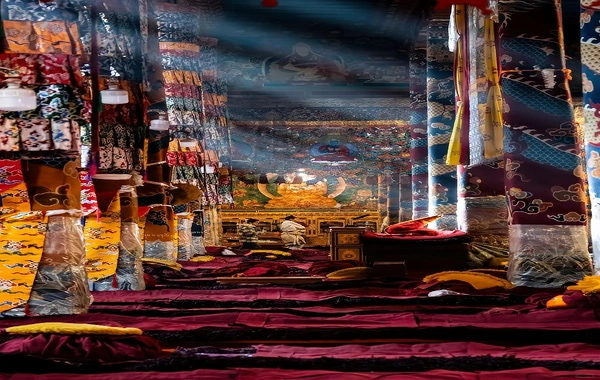
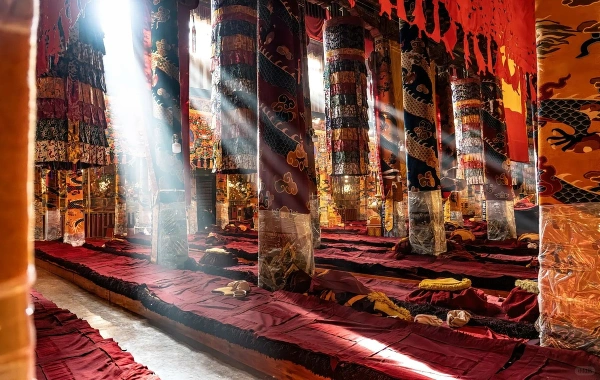
The temple roofs are clad in gilded copper tiles which, under the sunlight, shimmer with a radiant golden glow—a signature characteristic of Tibetan religious architecture. Inside the main hall, numerous statues of Buddhas, Bodhisattvas, and Guardian Deities are enshrined; the air is thick with the scent of incense, and the chanting of Buddhist sutras resonates ceaselessly.

The Jowo Buddha—The Most Sacred Image in the Hearts of the Tibetan People, Believed to Grant "Liberation Upon Sight"

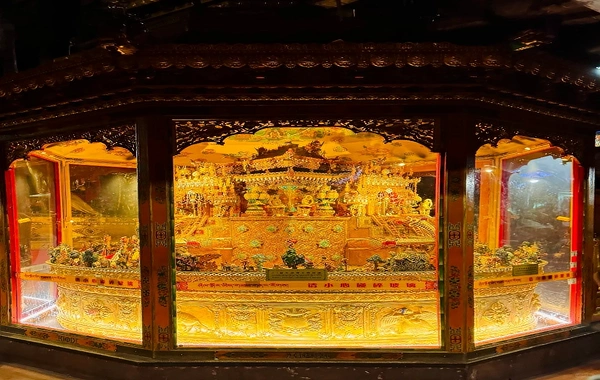
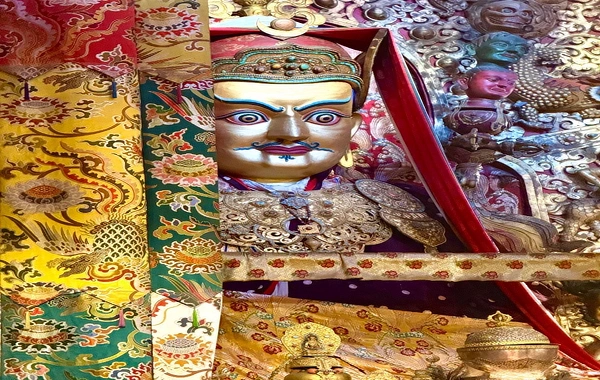
The very heart of the Jokhang Temple is the life-sized statue of Shakyamuni Buddha at the age of twelve, enshrined within the main hall. Standing approximately 1.5 meters tall, this statue is fabled to have been sculpted and consecrated under the personal guidance of Shakyamuni Buddha himself during his lifetime. Crafted to match the exact physical proportions of the Buddha at age twelve, the image possesses a countenance that is both majestic and benevolent; believers revere it as the true physical embodiment of the Buddha.

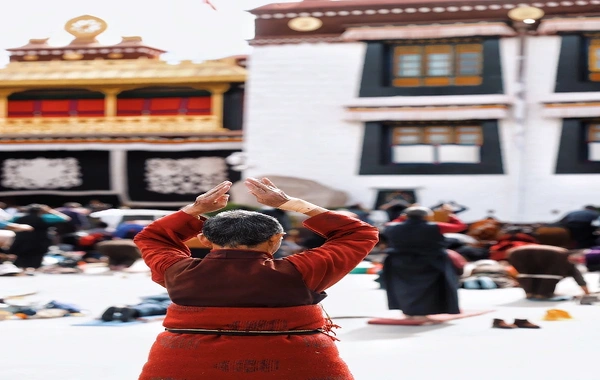
Every morning at dawn, pilgrims from across the Tibetan region converge here to offer 'khatas' (ceremonial scarves) and butter lamps, kneeling reverently before the Buddha to perform prostrations. Many devotees have trekked thousands of kilometers—enduring journeys lasting months or even years—performing full-body prostrations every step of the way to reach Lhasa; their ultimate goal is to behold this sacred Jowo Buddha statue. Standing before the image, one is moved by a palpable sense of faith—a spiritual force that transcends both time and space—leaving a profound and lasting impression on every visitor. > Photography Tip: Photography is strictly prohibited inside the Jowo Buddha Hall. Please respect religious beliefs and maintain an atmosphere of silence and reverence.

Mural Art—History and Faith in a Thousand-Meter Scroll

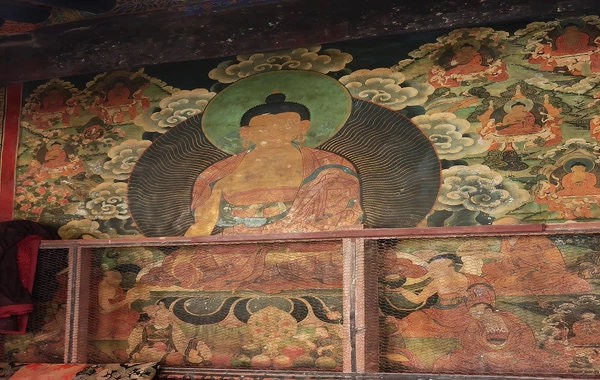
Preserved within the Jokhang Temple is a collection of Tibetan-style murals spanning nearly a thousand meters in total length, constituting a veritable treasure trove of Tibetan Buddhist mural art. The most renowned among them are undoubtedly 'Princess Wencheng’s Journey to Tibet' and 'The Construction of the Jokhang Temple'. These two murals vividly recreate historical scenes of cultural exchange between the Han and Tibetan peoples in the 7th century—depicting Princess Wencheng’s arduous journey from Chang'an across the Qinghai-Tibet Plateau to Lhasa, as well as the grand spectacle of the Jokhang Temple’s construction. Beyond their immense artistic value, they stand as tangible testaments to the enduring friendship between the Han and Tibetan peoples.

Furthermore, the temple houses two treasured embroidered Thangkas from the Ming Dynasty, depicting guardian deities. These represent two specific deities within the esoteric pantheon worshipped by the Gelug school of Tibetan Buddhism and are considered rare artistic masterpieces. The ancient murals found within the Hall of the Dharma Kings date back to the Tubo Kingdom era; their depictions of Bodhisattvas exhibit the distinctive stylistic characteristics of India’s Pala Empire, echoing the artistic traditions of the Tang Dynasty murals found in Dunhuang.

A Historical Monument—The Tang-Tubo Alliance Stele and the Unity of Han and Tibetan Peoples

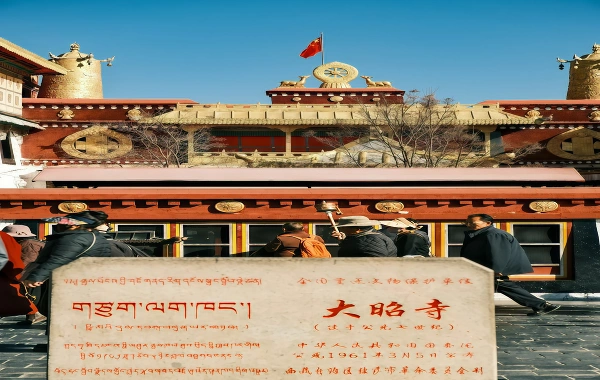
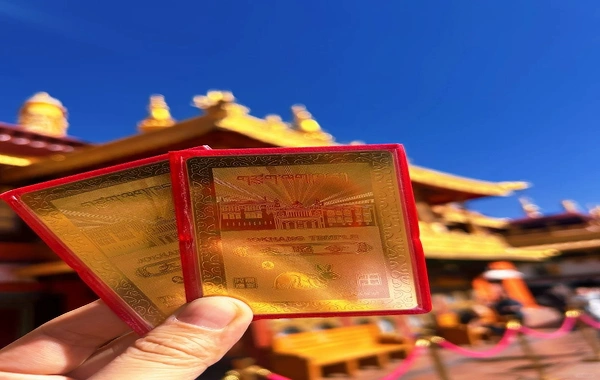
Standing before the entrance of the Jokhang Temple is a stone stele that has withstood the elements for over 1,200 years: the Tang-Tubo Alliance Stele—also known as the "Uncle-Nephew Alliance Stele" or the "Changqing Alliance Stele." In the third year of the Changqing reign of the Tang Dynasty (823 AD), the Tang court and the Tubo Kingdom erected this monument to commemorate the alliance forged between them during the first and second years of the Changqing era. The text of the treaty was inscribed upon the stone in both Chinese and Tibetan scripts. Standing approximately 5.6 meters tall, the stele bears an inscription declaring: "The two sovereigns—Uncle and Nephew—have deliberated and agreed that their states shall be as one; they have established a Great Alliance of Harmony that shall remain inviolable forever!" From that moment on, peace prevailed along the Tang-Tubo border, ushering in a new era characterized by the principle that "the two states are as one, united in harmony."

This stele serves as a historical witness to the unity and friendship shared by the Han and Tibetan peoples over the past twelve centuries, as well as a vital artifact for the study of Tubo history. It continues to stand proudly before the Jokhang Temple today, silently recounting the millennium-old bond between these two great nations—a bond defined by the spirit of "Uncle and Nephew, united as one family."

Core Experience: The Heart of Lhasa—Where Faith and Daily Life Intertwine

Furong Ancient Town Furong Ancient Town Furong Ancient Town Furong Ancient Town Furong Ancient Town

Five Must-Do Activities: Unlocking the Pilgrimage Experience at the Jokhang Temple

1.  ''Venerate the Jowo Buddha: Feel the Power of Faith Spanning a Millennium''

-   ''Experience:'' Step into the main hall of the Jokhang Temple and pause before the life-sized statue of the 12-year-old Siddhartha Gautama (the historical Buddha). In the early morning hours, the sounds of chanting rise and fall throughout the temple as devotees, holding butter lamps, offer their tributes in turn; their profound piety is enough to move any visitor. Stand quietly before the statue and feel the legacy of faith that has endured for 1,300 years.

-   ''Timing:'' It is recommended to arrive before 8:30 AM to avoid the peak tourist crowds and experience the most authentic pilgrimage atmosphere.

2.  ''Circumambulate Barkhor Street: Follow the Rhythm of the Prayer Wheels''

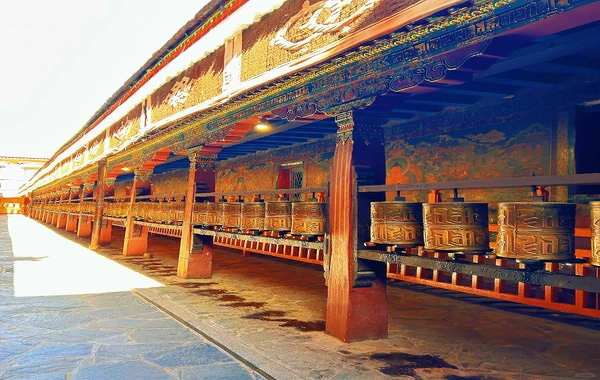
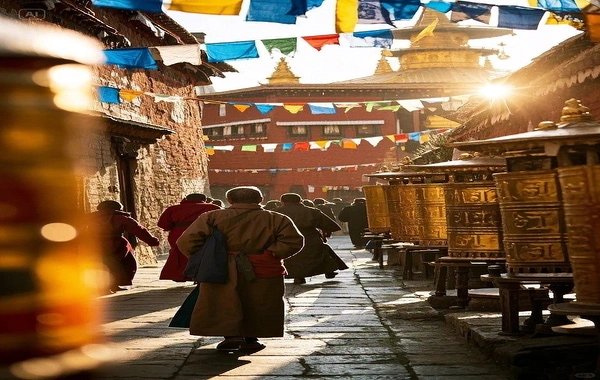
-   ''Experience:'' Step out of the Jokhang Temple, and you find yourself on the famous Barkhor Street. This ancient pilgrimage circuit, which encircles the temple, is Lhasa’s oldest and most bustling thoroughfare. Join the local Tibetans—who carry prayer wheels and softly chant the Six-Syllable Mantra—as they walk clockwise around the temple. Let the rhythmic 'click-clack' of the prayer wheels fill your ears while your feet tread upon the smooth, polished bluestone paving. Directly in front of the Jokhang Temple, you may also witness devotees performing full-body prostrations against the bluestone ground—the marks left upon their foreheads serving as a unique testament to the fervent faith found only in the Tibetan lands.

-   ''Recommendation:'' Find a seat at a sweet tea house adjacent to Barkhor Street; order a pot of sweet tea and a bowl of Tibetan noodles, then sit back to observe the passing pilgrims and the rhythm of daily life, allowing yourself to soak up the unhurried pace of Lhasa.

3.  ''Admire the Thousand-Meter Murals: Travel Back in Time to the Tang Dynasty and the Tubo Kingdom''

-   ''Experience:'' Wander through the halls and corridors of the Jokhang Temple to closely admire its Tibetan-style murals, which span a total length of nearly one thousand meters. The 'Mural of Princess Wencheng’s Arrival in Tibet' vividly recreates the historical scene from 641 AD, when Princess Wencheng arrived in Lhasa from Chang'an. Rich in detail—from the attire of the figures to the ceremonial carriages and retinues—it stands as a vibrant artistic testament to the cultural exchange between the Han Chinese and Tibetan peoples. Take a moment to slow your pace and linger within this magnificent artistic treasure trove. - Tip: The lighting in certain areas housing murals can be dim; feel free to ask the monks inside the temple if guided tours are available.

4.  ''View the Tang-Tibet Alliance Tablet: Touch an Oath from a Millennium Ago''

- Experience: Step out of the Jokhang Temple and look for this thousand-year-old stone tablet situated right in front of the temple gate. Examine the inscriptions on the tablet's surface—written in both Chinese and Tibetan scripts—and imagine the solemn moment, 1,200 years ago, when the Tang and Tibetan empires stood here to pledge their alliance: "Our states shall be as one." This monument stands as one of the earliest memorials to ethnic unity in Chinese history; as you stand before it, the weight of history washes over you.

- Photography: The Tang-Tibet Alliance Tablet serves as an excellent foreground element for capturing photos of the Jokhang Temple's architecture and the surrounding cultural atmosphere. The lighting is best during the early morning and late afternoon hours.

5.  ''Savor Tibetan Flavors: Experience the Vibrant Local Life of the Snow Land''

- Must-Try Delicacies: Sweet tea, butter tea, Tibetan noodles, yak meat buns, 'tsampa', yogurt, and barley wine.

- Recommended Spots: Tibetan-style sweet tea houses located around Barkhor Street (e.g., Guangming Gangqiong Sweet Tea House, Gushu Yogurt) and Tibetan restaurants (e.g., Makye Ame).

- Unique Experiences: Purchase a small prayer wheel charm from one of the stalls near the Jokhang Temple Square, or select a 'Thangka' painting to take home as a souvenir of your journey.

Suggested Itinerary

''Half-Day "Origin of Faith" Highlights Tour'' (Ideal for those with limited time):

Arrive at the Jokhang Temple Square security checkpoint at 8:30 AM → Tour the Main Hall of the Jokhang Temple to pay homage to the life-sized statue of the 12-year-old Shakyamuni Buddha (30 minutes) → Explore the halls on the second and third floors to admire the murals and 'Thangka' paintings (30 minutes) → Ascend to the rooftop terrace to photograph the temple's golden roofs and enjoy panoramic views of the Potala Palace (15 minutes) → Exit the Jokhang Temple and visit the Tang-Tibet Alliance Tablet (10 minutes) → Stroll along the 'kora' (pilgrimage circuit) on Barkhor Street to soak up the atmosphere of devotion (40 minutes) → Take a short break at a sweet tea house on Barkhor Street → Tour concludes around 12:00 PM. IntoTravelChina Tip: Visits to the Jokhang Temple require a real-name reservation made one day in advance via the official WeChat account; during peak season, we recommend booking three days in advance. Visitors must dress modestly; shorts, short skirts, and revealing tops (bare shoulders or backs) are strictly prohibited.

One-Day "Heart of the Holy City" Immersive Tour (Recommended Pairings: Potala Palace or Norbulingka):

- Option A (Paired with Potala Palace): Morning visit to the Potala Palace (3 hours) → Lunch near Potala Palace Square (1 hour) → Afternoon visit to the Jokhang Temple (1.5 hours) → Stroll along Barkhor Street and experience the ritual circumambulation (1.5 hours) → Evening: Photograph the temple's golden rooftops bathed in the sunset glow from Jokhang Temple Square.

- Option B (Paired with Norbulingka): Morning visit to the Jokhang Temple + Stroll along Barkhor Street (3 hours) → Lunch at a Tibetan restaurant on Barkhor Street (1 hour) → Afternoon trip to Norbulingka (15-minute drive; visit lasts 1.5–2 hours) → Evening return to Barkhor Street to experience the night market and local sweet tea houses.

IntoTravelChina Advantage: We can book the perfect accommodation to suit your needs, seamlessly coordinate the transitions between all your activities, and provide detailed guidelines on high-altitude acclimatization and safety protocols.

> Professional Guides: IntoTravelChina offers fully customized itineraries—including a dedicated private guide, transportation, and activity arrangements—ensuring a deeply immersive and completely worry-free travel experience. >> [Consult for Customization Now]

Comprehensive Travel Guide: Transport, Timing, and Seasons

Furong Ancient Town Furong Ancient Town Furong Ancient Town Furong Ancient Town Furong Ancient Town

How to Get There: Easily Accessible from Lhasa City Center

The Jokhang Temple is situated in the heart of Lhasa's Old Town, offering extremely convenient access.

- ''By Air:'' Flights from across the country arrive at Lhasa Gonggar International Airport, located approximately 60 kilometers from the city center. You can take an airport shuttle bus (30 RMB per person; journey takes about 1 hour) to reach the city center, then walk or take a taxi to the Jokhang Temple.

- ''By Train:'' The Lhasa Railway Station (on the Qinghai-Tibet Railway) is located in the western suburbs of the city. You can take public buses (such as Routes 1, 13, or 14) or a taxi to reach the Jokhang Temple (approx. 20 minutes; 20–30 RMB).

- ''Local Transport:'' The Jokhang Temple is centrally located; it is a pleasant 15–20 minute walk from the Potala Palace Square. Taxi flag-down rates start at 10 RMB, and most destinations within the city center can be reached for under 20 RMB.

- ''Temple Entrance:'' The main entrance to the Jokhang Temple is located on the eastern side of Barkhor Square. Security checks are mandatory for entry. Visitors should use the designated lane on the right; please do not join the queues formed by local pilgrims.

''Important Return Tip:'' Taxis are readily available around the Jokhang Temple area; however, as visitor numbers peak in the afternoon, it is advisable to book a ride-hailing service in advance. The Barkhor Square area is brightly lit in the evenings, making it safe and pleasant to walk back to your hotel.

Best Time to Visit

The Jokhang Temple is open to visitors year-round, but spring and autumn (April–May and September–October) offer the most pleasant weather and are considered the best seasons for a visit.

- ''Spring & Autumn "Golden Seasons" (April–May; September–October):'' Temperatures are comfortable (7–16°C), rainfall is minimal, the skies are azure, and sunshine is abundant. This is the prime time for photographing the Jokhang Temple's golden roof and capturing the vibrant cultural atmosphere of Barkhor Street.

- ''Summer "Heat-Escape" Season (June–August):'' Temperatures are higher (17–18°C), though rainfall is more frequent. Summer marks the peak tourist season in Tibet, attracting large crowds; therefore, advance booking is highly recommended. A key advantage of visiting during this period is the higher oxygen levels, which help mitigate the effects of altitude sickness. In August, during the Shoton Festival, visitors can attend grand celebrations held at the Norbulingka. - ''Winter Tranquility Season (Nov–Mar):'' Temperatures are cold (averaging 2–8°C), yet the weather is sunny with exceptionally clear skies. Visitor numbers are low during winter, allowing you to enjoy the serenity of the Jokhang Temple in solitude. ''Special Note:'' From January to March each year—during the "Winter Tourism in Tibet" promotional period—the Jokhang Temple offers off-season ticket rates. After a snowfall, the temple's golden roof and red walls appear particularly sacred and pristine.

- ''Best Daily Visiting Times:'' The period between 8:30 AM and 10:00 AM is when pilgrims are most concentrated, offering the most authentic religious atmosphere. In the afternoon, as the sun begins to dip toward the west, the colors of the golden roof and red walls appear most vibrant and saturated—ideal for photography.

Tickets and Opening Hours

- ''Ticket Prices:'' Peak Season (May–Oct) is approximately 85 RMB per person; Off-Season (Nov–Apr) is approximately 35 RMB per person. Children aged 10 and under are admitted free of charge.

- ''Ticket Purchase:'' Reservations must be made in advance (at least one day prior) using your real name via the official "Jokhang Temple" WeChat Official Account or Mini Program. During the peak season, it is recommended to book at least three days in advance. Each valid ID document is limited to one reservation for either the Jokhang Temple or the Potala Palace within a seven-day period.

- ''Opening Hours:'' Typically 8:30 AM – 6:30 PM (18:30). During the off-season (Nov–Apr), opening hours may be adjusted to 9:30 AM – 3:20 PM (15:20). Afternoon visiting slots typically do not require a specific reserved entry time.

- ''Dress Code:'' Visitors are required to dress modestly and respectfully. Shorts, short skirts, and revealing tops (bare shoulders or backs) are prohibited. Open-toed sandals or flip-flops are not permitted, and hats must be removed upon entry.

- ''Photography Regulations:'' Unless explicit permission has been granted, please refrain from taking intrusive or disrespectful photographs/videos of the local pilgrims or the temple monks.

Accommodation Options

- ''Barkhor Street Area (Highly Recommended):'' Located in the immediate vicinity of the Jokhang Temple, offering easy walking access to both the temple and Barkhor Street. This area features a wide range of accommodation options, from budget-friendly guesthouses to high-end boutique hotels. ''Reference Prices:'' Budget-friendly options range from 200–400 RMB per night; Mid-range/Comfortable options range from 400–800 RMB per night; and High-end options start at 800 RMB and above. - ''Potala Palace Square Area:'' Situated between the Potala Palace and the Jokhang Temple, this area offers walkable access to both of Lhasa's core attractions—ideal for travelers seeking a convenient, all-in-one sightseeing experience.

- ''Xianzu Island / Sun Island Area:'' Located along the banks of the Lhasa River, this hotel district boasts beautiful surroundings, with select properties offering scenic river views. It is situated approximately 3–5 kilometers from the Jokhang Temple, a taxi ride of about 15–20 minutes.

IntoTravelChina Accommodation Booking Recommendations:

We strongly recommend planning your itinerary and booking your accommodation 1–2 months in advance—especially during the peak season (June to October), when availability is tight. Tibetan-style boutique hotels located around Barkhor Street are particularly high in demand and often book out quickly. By booking through us, you gain access to real-time room availability and the opportunity to bundle your accommodation, attraction tickets, and transportation into a single package. This often results in combined savings and ensures a seamless, hassle-free itinerary. Simply let us know your budget and specific requirements, and we will match you with the perfect "Sacred Abode of the Snowland."  >> [Consult for Customization Now]

Journey Extensions: A Loop Connecting the Highlights of the Snowland Plateau

The Jokhang Temple is by no means the end of your journey; rather, it serves as the perfect starting point for exploring the magnificent landscapes of the Tibetan Plateau.

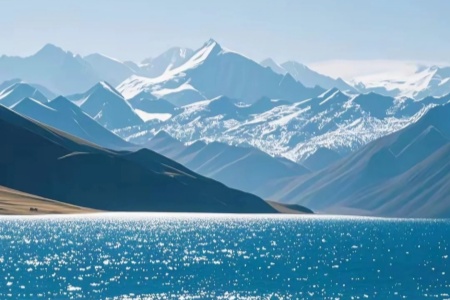
- ''Classic 3-Day Loop:'' Lhasa (Jokhang Temple + Barkhor Street + Potala Palace) → Yamdrok Lake (one of Tibet's three sacred lakes) → Karola Glacier → Shigatse (Tashilhunpo Monastery). This classic route seamlessly blends sacred sites of Tibetan Buddhism with the stunning natural beauty of high-altitude lakes and glaciers.

- ''Namtso Lake Day Trip / Two-Day Tour:'' Depart from Lhasa to visit Namtso Lake—the highest-altitude saltwater lake in the world (elevation: 4,718 meters)—and experience the pristine purity and grandeur of this "Heavenly Lake." The one-way journey takes approximately 4 hours; you may choose to return to Lhasa on the same day or stay overnight by the lakeside.

- ''Nyingchi Peach Blossom Valley Tour (Spring Exclusive):'' Travel from Lhasa to Nyingchi between March and April to witness the magnificent spectacle of wild peach blossoms blanketing the hillsides, set against the majestic backdrop of snow-capped mountains. 

Partner with IntoTravelChina to Embark on Your Exclusive Pilgrimage to the Land of Snows

The story of the Jokhang Temple is one of 1,300 years of unwavering faith, the harmonious coexistence and cultural fusion of the Han and Tibetan peoples, and the magnificent achievements of Tibetan Buddhist art. As you step into this "Premier Sanctuary of the Land of Snows," you will not only witness the supreme sanctity and majesty of the Jowo Buddha with your own eyes, but also—through every brick, tile, brushstroke, and carving—feel the very pulse of faith and the profound cultural heritage of the Tibetan Plateau.

IntoTravelChina specializes in crafting in-depth, personalized, and hassle-free travel experiences across China. Our travel experts are here to provide you with:

- ''Tailored Itineraries:'' We design the perfect route—featuring the Jokhang Temple and surrounding attractions in Tibet—customized to your specific interests and schedule.

- ''One-Stop Service:'' We handle all the details, including entrance tickets, unique accommodations, transportation transfers, local guides, and activity bookings.

- ''Exclusive Experiences:'' We arrange special features such as expert-led interpretations of murals and scriptures, authentic Tibetan 'kora' (pilgrimage circuit) experiences, high-altitude acclimatization guidance, and more.

Let your visit to the Jokhang Temple be more than just sightseeing—let it be an immersive pilgrimage into the heart of Tibetan culture.

> Start Planning Your Journey Today

> We invite you to contact our professional travel consultants; we will provide you with a personalized itinerary proposal and quotation within 24 hours. >> [Consult for Customization Now]
What Our Clients Say?

Based on 10,000+ traveler reviews

...
Daniel Dorothea
Canada
Reviewed on April 29,2025
Shopping on Nanjing Road in Shanghai was just amazing! It's truly the "First Commercial Street of China", where tradition and modernity blend perfectly. You can find awesome souvenirs and experience the trendy vibes in cool stores. The neon lights at night are just spectacular, shining bright like Times Square in New York. The food here is incredible too. I had a feast for my taste buds. Shanghai, I'll definitely be back!
Destination(s): Shanghai
Date of Experience: May 08,2024
...
...
Elvis Eva
Canada
Reviewed on June 20,2025
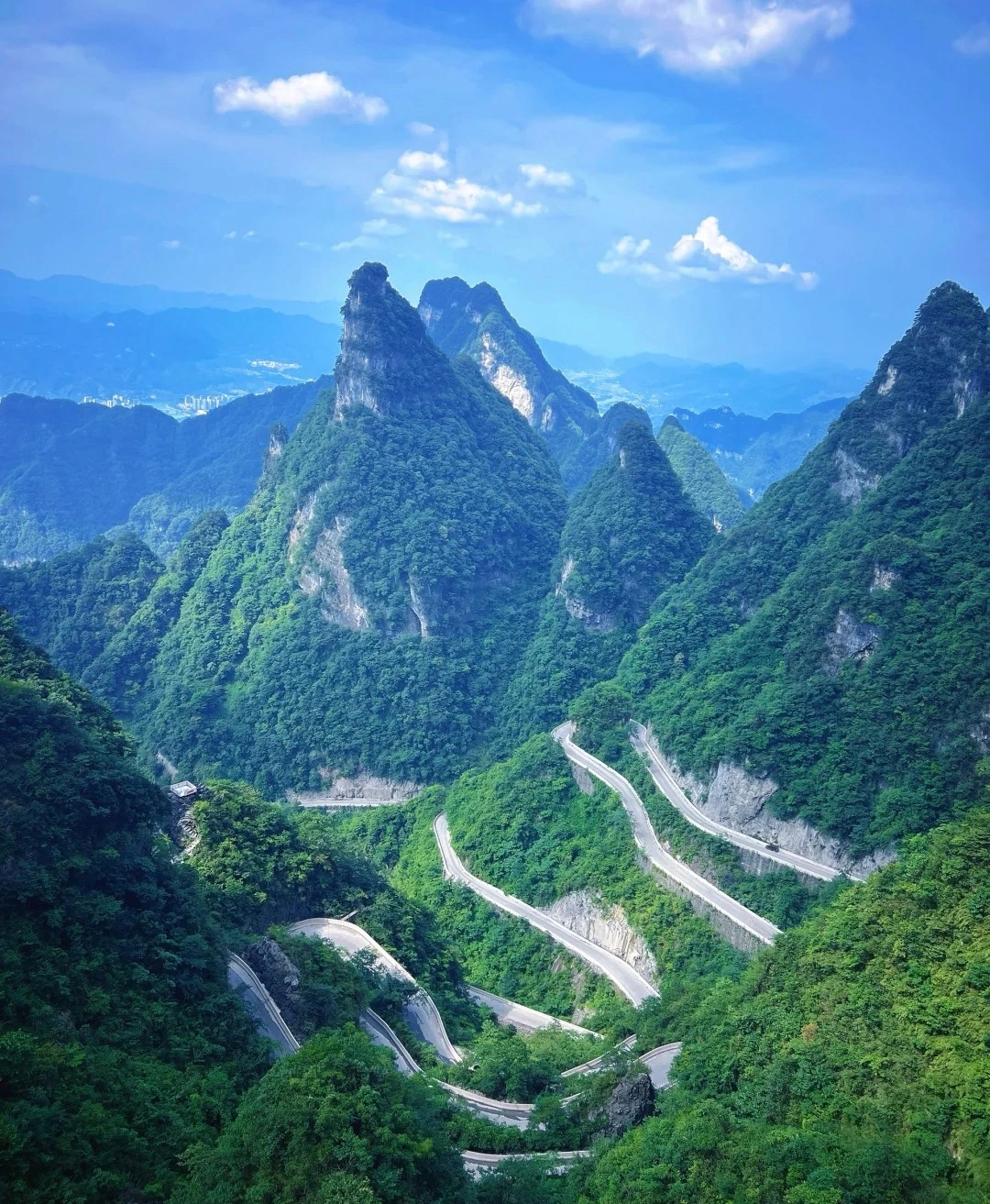
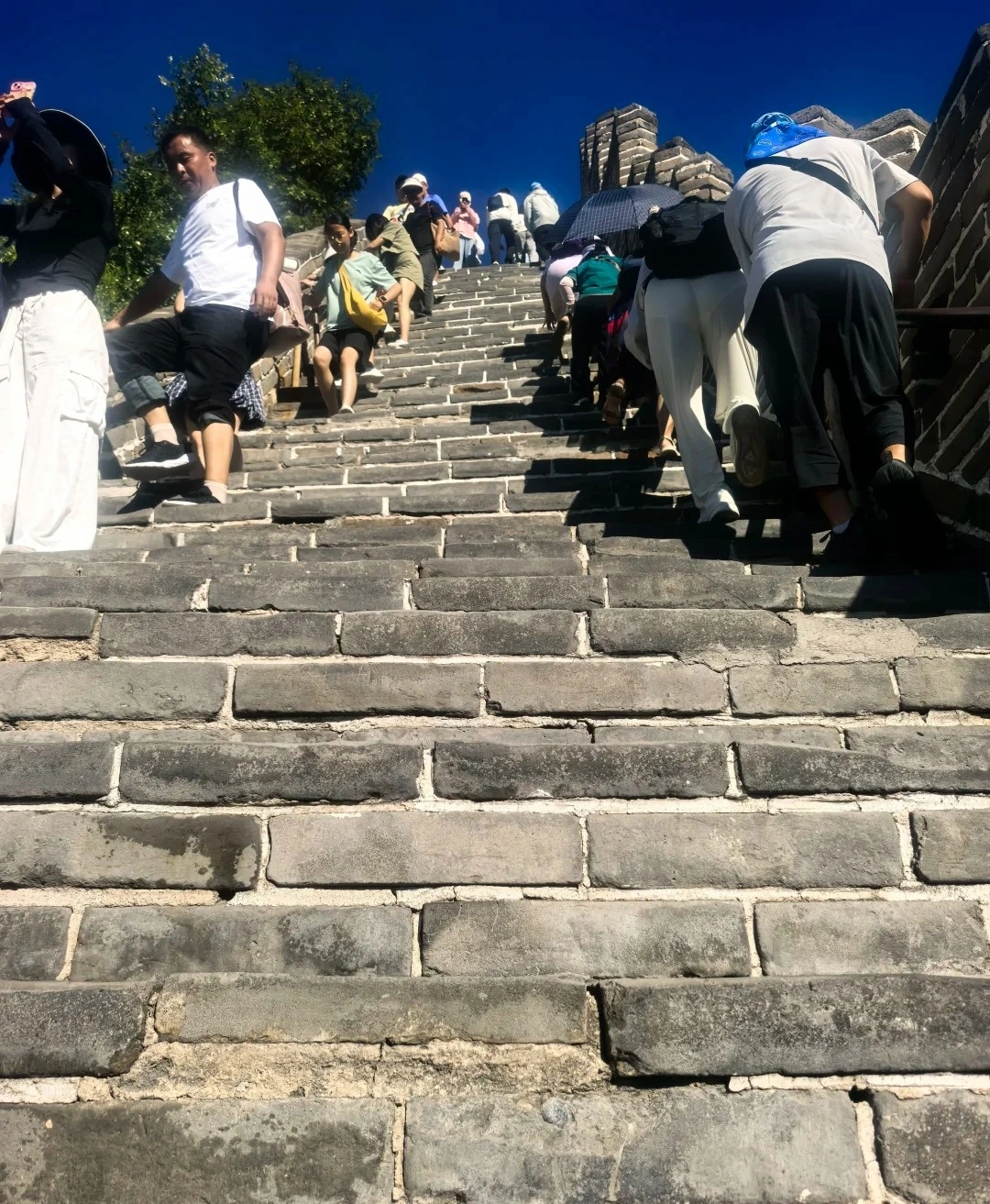
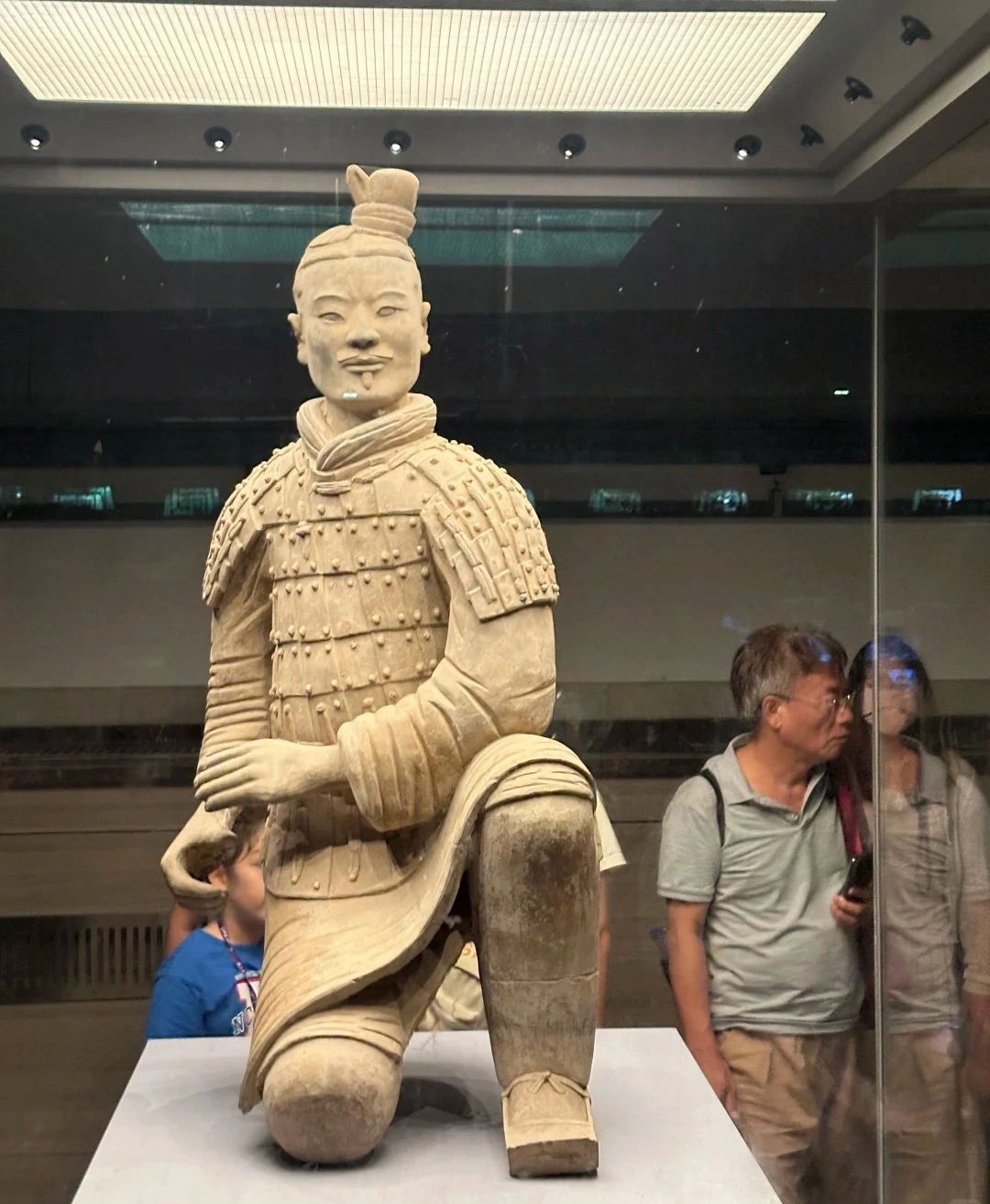
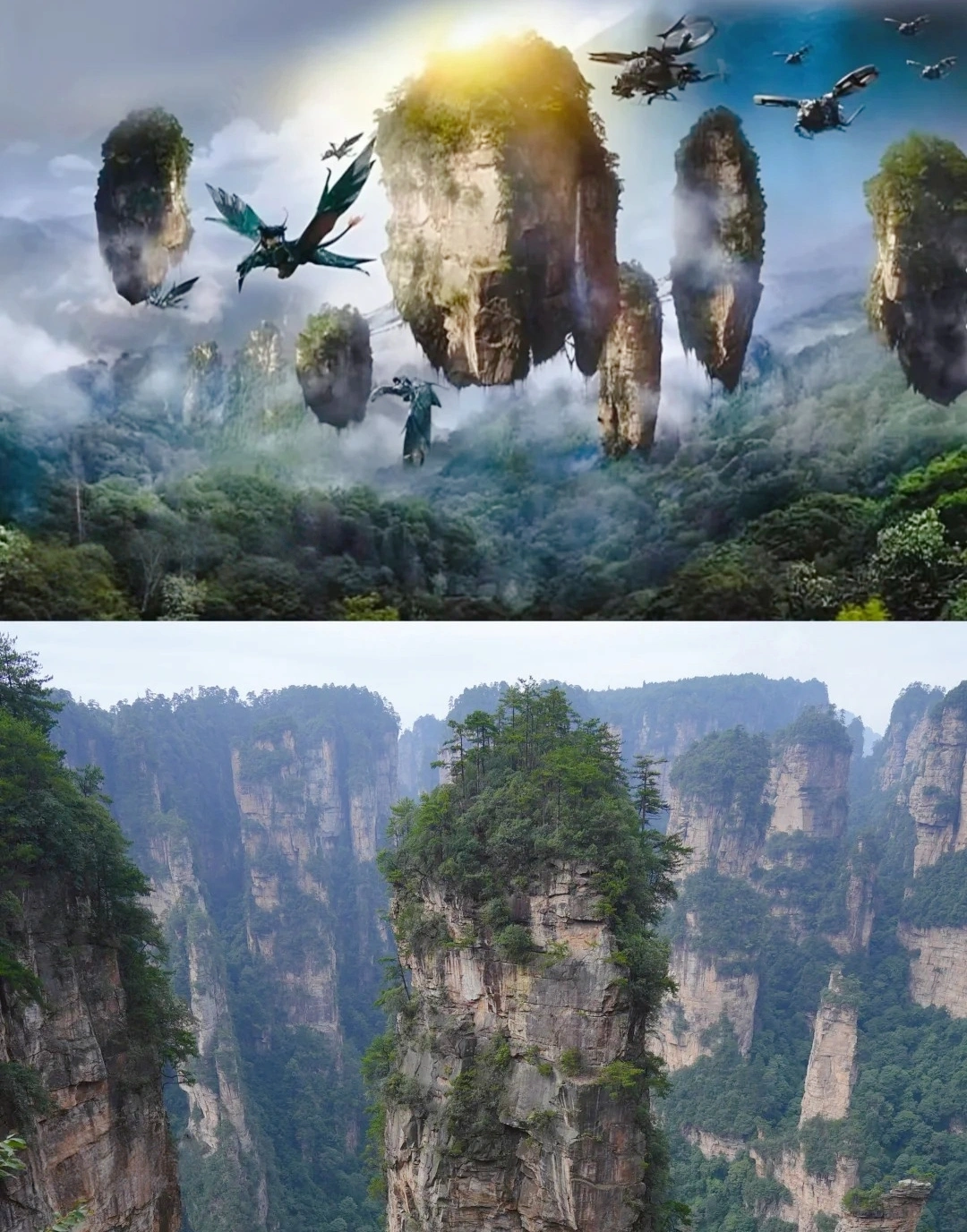
As a solo traveler from Canada, I was nervous about navigating China alone—but this 11-day tour was PERFECT! From hiking the Great Wall at sunrise (Day 3) to gasping at the Terracotta Army (Day 5), every day delivered ‘pinch-me’ moments. The real showstopper? Zhangjiajie’s Avatar Mountains (Day 7)! Our guide made the stone pillars come alive with stories. Massive thanks for handling all logistics—bullet train tickets, entry passes, car! And the 4-star hotels surprised me.
Destination(s): Beijing Xian Zhangjiajie Shanghai
Date of Experience: June 02,2025
... ... ...
...
Simon
America
Reviewed on May 29,2025
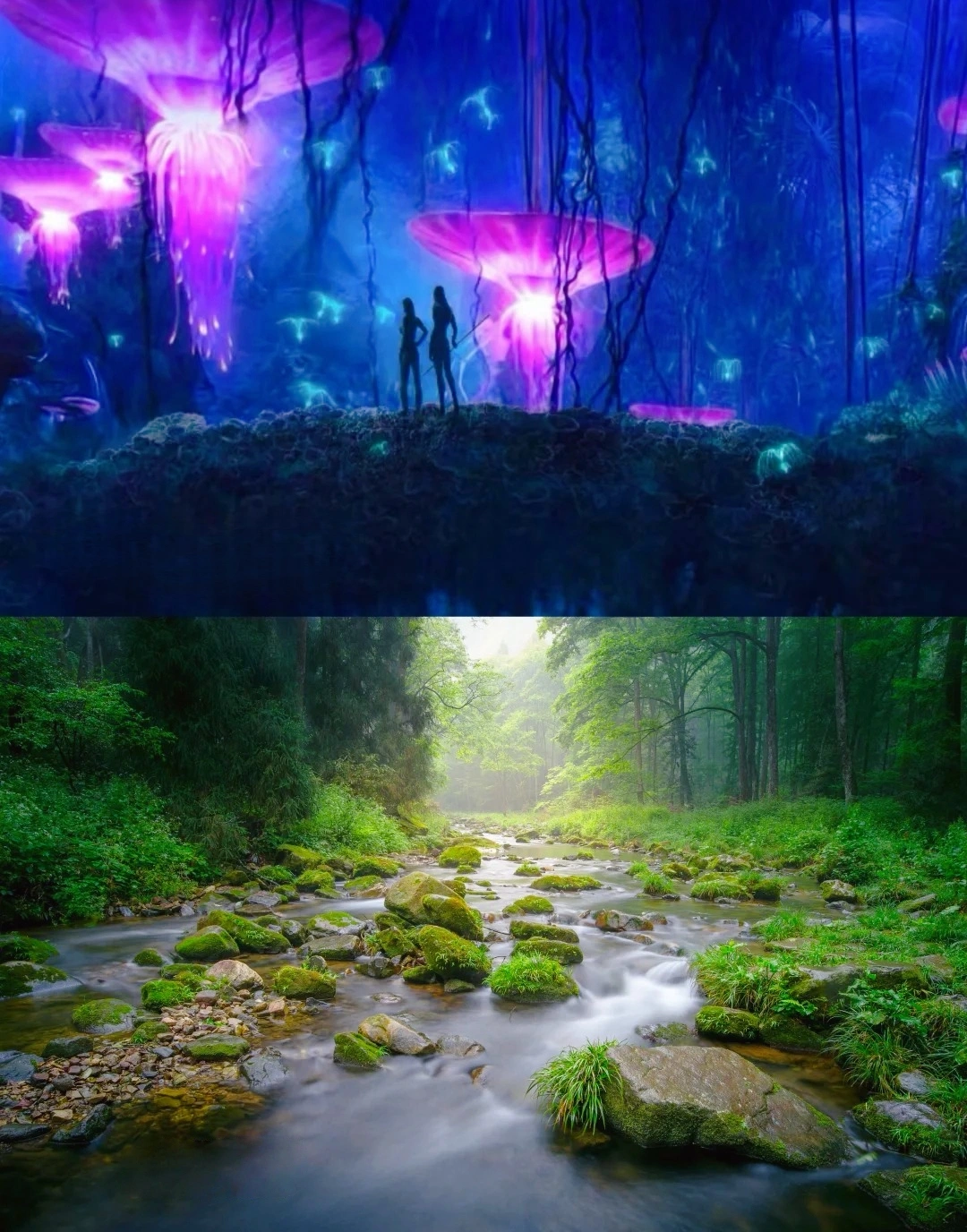
Our 2-day Zhangjiajie tour was beyond spectacular! As someone who’s visited Beijing and Shanghai for work, this trip revealed China’s wild, magical heart. Day 1 in Zhangjiajie National Forest Park felt like stepping onto Pandora—I’m a huge Avatar fan, and Yuanjiajie’s floating peaks left me breathless. The misty pillars and lush valleys like pure movie magic! Then came Fenghuang Ancient Town, we eat dinner beside the thundering waterfall. It seems Unreal! The night views of stilt houses glowing over the river were straight from a fairy tale. For fellow Avatar lovers and adventure seekers: Don’t miss this bucket-list experience! 10/10 would return. A Well-Traveled Film Buff, May 2025
Destination(s): Zhangjiajie
Date of Experience: May 08,2025
... ...

FAQ

What is the most famous relic in Jokhang Temple?

The most famous relic in Jokhang Temple is the 12 - year - old statue of Sakyamuni, which was brought into Tibet by Princess Wencheng.

Can we take photos inside Jokhang Temple?

Photography is prohibited inside the main hall of Jokhang Temple, especially in the area where the statue of Sakyamuni is located. You need to take off your hat and sunglasses and keep solemn.

What other places are worth visiting near Jokhang Temple?

Near Jokhang Temple, there are places worth visiting such as the Potala Palace, which is about a 20 - minute walk away, and the Ramoche Temple, which houses the 8 - year - old statue of Sakyamuni. There is also the famous Maggi Ami Restaurant in Barkhor Street, where it is said that Tsangyang Gyatso met his lover.

How long does it take to walk from the Potala Palace to Jokhang Temple?

It takes about 20 minutes to walk from the Potala Palace to Jokhang Temple.

What etiquettes should be noted when visiting Jokhang Temple?

When visiting Jokhang Temple, you should walk clockwise, not step on the threshold, and not point at the Buddha statue. You need to take off your hat and shoes before entering the temple, and dress modestly and respectfully. Non - Buddhists are not allowed to enter certain areas of the temple.

Ask a Question

Question Summary (100 characters)
Details (optional) (2,000 characters)
Name
Country
Email